
Retrograde Intrarenal Surgery (RIRS) in Delhi
Advanced laser treatment for kidney stones without any cuts or scars
Advanced Kidney Stone Treatment
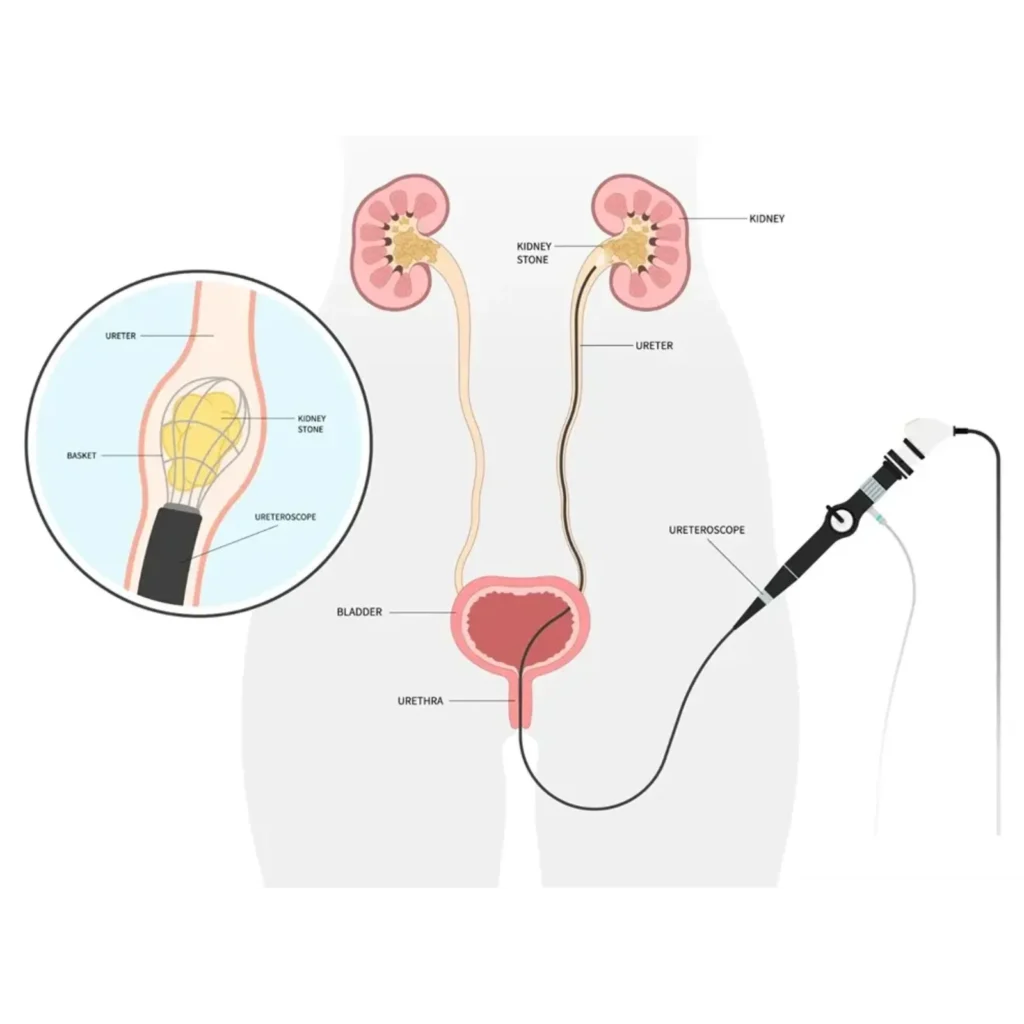
At BLK Max, led by Dr. Shafiq Ahmed, we offer the most advanced and cutting-edge technologies for kidney stone treatment, including Retrograde Intrarenal Surgery (RIRS). RIRS is a revolutionary procedure that utilizes a flexible endoscope and laser to disintegrate even large stones located deep within the kidney. The procedure is entirely non-invasive, leaving no scars or cuts on the body and ensuring the quickest possible recovery.
What is Retrograde Intrarenal Surgery (RIRS)?
RIRS is a breakthrough medical technique used to treat kidney stones. Unlike traditional surgeries, RIRS does not require any incisions or external cuts. Instead, it employs a flexible endoscope - a thin, highly maneuverable tube-like instrument - which is gently inserted into the urinary tract to reach the kidney where the stone is located.
No External Cuts or Scars
- • Natural access: Through urethra without surgical incisions
- • Reduced infection risk: No external wounds to heal
- • Cosmetic benefit: No visible scarring
- • Faster recovery: Return to normal activities in days
Direct Visualization & Precision
- • High-definition imaging: 4K resolution for crystal-clear visualization
- • Laser technology: Holmium laser precisely fragments stones
- • Complete access: Reaches all kidney areas including lower pole
- • Tissue preservation: Minimizes damage to surrounding tissues
Ideal Candidates for RIRS Treatment
RIRS is particularly suitable for patients who require precise stone removal with minimal disruption to their daily lives. Our expert team carefully evaluates each case to determine if RIRS is the optimal treatment approach.
When is RIRS Recommended?
Kidney Stones (up to 2.5cm):
Stones in renal pelvis or calyces that haven't responded to medical therapy, including challenging lower pole stones
Multiple & Complex Stones:
Multiple kidney stones in different locations or stones resistant to ESWL (shockwave therapy)
Special Populations:
Patients with bleeding disorders, on blood thinners, morbid obesity, anatomical abnormalities, or pediatric patients
The RIRS Procedure: Step-by-Step Process
Our standardized RIRS protocol ensures maximum safety and optimal outcomes through careful planning and execution:
Comprehensive Evaluation
High-resolution CT scan, renal function tests, and pre-anesthetic workup
Anesthesia
General anesthesia administered by board-certified anesthesiologists
Endoscope Navigation
Gentle insertion of flexible ureteroscope through natural passages
Laser Fragmentation
Holmium laser precisely pulverizes stones into fine dust
Stone Clearance
Natural passage of dust or basket retrieval of fragments
Stent Placement
Optional temporary DJ stent for optimal drainage and healing
Post-procedure Care
Recovery monitoring with advanced pain management
Discharge Planning
Same-day discharge with detailed recovery instructions
Comparative Advantages Over Traditional Methods
| Treatment Aspect | RIRS | PCNL | Open Surgery | ESWL |
|---|---|---|---|---|
| Invasiveness | No external cuts | Small incision | Large incision | Non-invasive |
| Hospital Stay | Same day | 2-3 days | 5-7 days | Outpatient |
| Recovery Time | 1-2 days | 1-2 weeks | 4-6 weeks | 3-5 days |
| Success Rate (>2cm) | 95-98% | 90-95% | 85-90% | 30-40% |
| Scarring | None | Small scar | Large scar | None |
| Return to Work | 2-3 days | 1-2 weeks | 4-6 weeks | 2-3 days |
DJ Stenting During RIRS
At BLK Max, led by Dr. Shafiq Ahmed, patient well-being and comfort are paramount in every kidney stone treatment we offer, including Retrograde Intrarenal Surgery (RIRS). To further optimize the procedure's success and facilitate a smooth recovery, our expert urologists may incorporate DJ stenting, also known as double-J stenting, during RIRS.
Benefits of DJ Stenting in RIRS:
-
Prevents Obstruction: Ensures continuous urine flow from kidney to bladder
-
Reduces Swelling: Minimizes ureteral edema after procedure
-
Facilitates Healing: Acts as scaffold for ureteral lining regeneration
-
Easy Removal: Typically removed in 1-2 weeks via simple cystoscopy
Personalized Stent Management
Duration
Stent typically remains for 7-14 days based on individual healing
Comfort Measures
Alpha-blockers and antispasmodics for stent-related symptoms
Warning Signs
Fever, severe pain, decreased urine output, or visible clots
Recovery Timeline & Success Metrics
High Success Rate
RIRS boasts 95-98% stone clearance rate for kidney stones up to 2.5cm
- Superior clearance rates
- Single procedure efficacy
- Reduced repeat treatments
Rapid Recovery
Patients typically return to normal activities within 1-2 days
- Same day discharge
- Minimal downtime
- Quick return to work
Patient Satisfaction
98% patient satisfaction with procedure outcomes and experience
- Minimal discomfort
- Excellent cosmetic outcome
- Comprehensive follow-up care
Advanced RIRS Technology at BLK Max
We invest in the latest endoscopic equipment to ensure precision, safety, and optimal outcomes for every patient. Our state-of-the-art technology includes digital flexible ureteroscopes with 4K resolution, advanced holmium laser systems, and pressure-controlled irrigation systems.
Digital Imaging
4K resolution ureteroscopes with 270° deflection capability
Laser Technology
Holmium laser systems for precise stone fragmentation
Safety Systems
Pressure-controlled irrigation and real-time monitoring
Schedule Your RIRS Consultation Today
Contact BLK Max to schedule a comprehensive evaluation with Dr. Shafiq Ahmed and our expert urology team. We offer same-day appointments for urgent cases and provide detailed consultations to determine if RIRS is the right treatment option for you.